Lead Generation Strategies
For contractors in 2026
An in-depth guide on driving more leads for your contracting business.
An in-depth guide on driving more leads for your contracting business.
Generating enough leads is one of the toughest part about being a contractor and running a home service business.
You know all about the feast and famine cycles or how the economy can slow down business.
This guide is going to teach you proven ways to generate more leads as a contractor so you can confidently grow your business.
Let’s get into it!
Getting more leads sounds simple enough.
Run some ads. Build a website. Post on Facebook. Wait for the phone to ring.
Unfortunately, contractor lead generation rarely works that neatly.
LocaliQ analyzed 3,211 U.S. home-services search advertising campaigns and found the median cost per lead was $90.92, while 69% of home-service categories saw lead costs increase year over year.
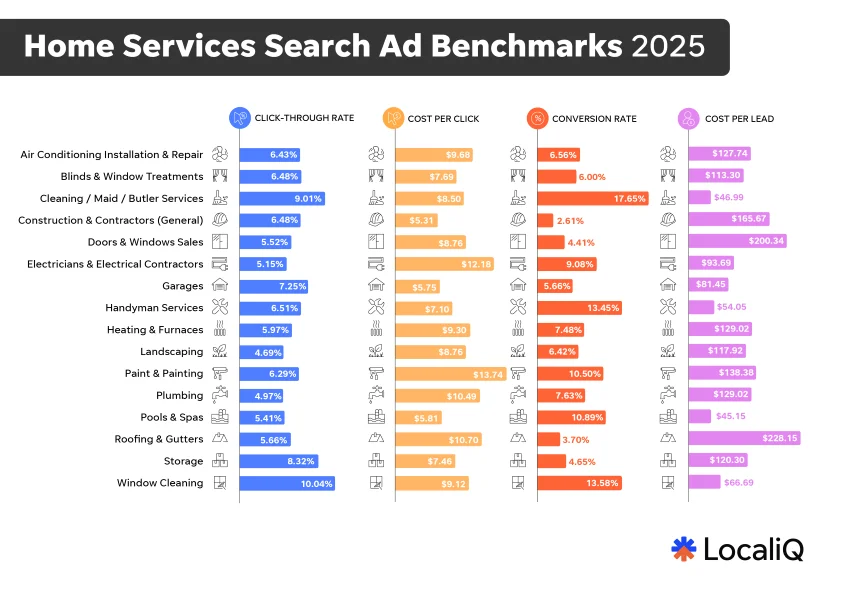
Below we’ll get into the tactics that will help you drive more leads at an affordable cost.
Before you choose an advertising platform, decide what you want more of.
This sounds obvious, but it’s one of the biggest mistakes contractors make. The answer completely changes the marketing strategy.
If a full roof replacement is worth significantly more to your business than a minor repair, you may be willing to spend considerably more to acquire that customer.
The same applies to almost every trade.
Before launching any contractor lead generation campaign, note the services you want to grow, average job value, the jobs you don’t want, and your ideal customer.
Your marketing should be built backward from these answers.
Otherwise, you can end up generating plenty of leads that aren’t particularly valuable to the business.
We highly suggest creating what’s called a buyer persona or ideal customer profile (ICP). There are plenty of online templates you can use, like this one:
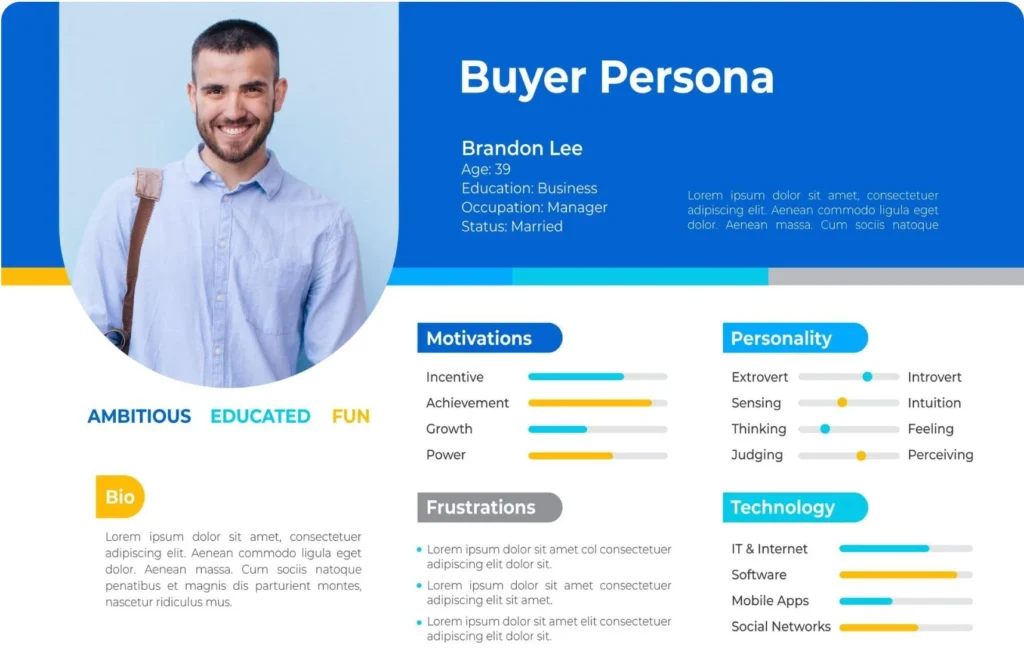
You essentially create a fictional version of your customer that becomes a reference for all of your marketing, advertising, and sales.
Let’s say you name the persona “Homeowner Henry”. Every time you make a marketing decision, you need to ask, “Are we targeting Henry and speaking to his needs?”
Yes? Great. If not, adjust the strategy and messaging otherwise you won’t attract and convert the right people. Remember, marketing to everyone means you’re marketing to no one.
Google Search Ads are one of the strongest lead generation strategies for contractors because they put your company in front of someone who is already looking for help.
There’s a huge difference between:
Someone scrolling through Facebook…
and someone typing:
“emergency plumber near me.”
The second person has intent.
LocaliQ’s home-services benchmark found approximately 180,000 monthly U.S. searches for “plumber near me” and 78,000 for “handyman.” Across the home-services category, search ads produced a median click-through rate of 6.37% and conversion rate of 7.33%.
But simply running Google Ads isn’t enough.
If you’re a bathroom remodeler, keywords such as:
These generally tell you more about someone’s intent than broad searches such as:
One group may be looking for a contractor. The other may just be looking for inspiration.
Negative keywords tell Google what you don’t want to show up for.
A remodeler may want to exclude terms related to:
Review your search terms regularly.
If you’re paying $8, $10, or $15 for a click, you want as many of those clicks as possible coming from potential customers.
Don’t throw every service into one giant campaign.
Someone searching for “roof replacement” should see messaging about roof replacement.
Someone searching for “storm damage roof repair” should see messaging about storm damage.
Think about it like this:
Keyword → advertisement → landing page
The more everything matches what the homeowner wants, the easier it becomes to convert the click.
If your trade and market are eligible, Local Services Ads should probably be on your radar.
These are the contractor listings that can appear prominently in Google Search and allow customers to call, message, or sometimes book directly.
Unlike normal Google Search Ads, where you’re typically paying for clicks, Google says Local Services Ads operate on a pay-per-lead model for relevant customer inquiries.
Eligible categories include many common trades such as:
Why are LSAs useful?
Because they combine three valuable things:
High intent + prominent placement + trust.
Someone searching for a contractor can see your business information, reviews, verification status, and a way to contact you without digging through several websites.
One thing contractors often overlook is responsiveness.
Google specifically recommends responding to LSA leads quickly and says consistently fast response times can help your ability to receive leads; regularly failing to answer calls or messages may negatively affect ad ranking.
So don’t turn LSAs on if nobody is going to answer the phone.
Which brings us to something we’ll discuss later: generating the lead is only half the battle.
Google is great at capturing demand. Facebook and Instagram can help create it.
A homeowner may not wake up tomorrow and search: “bathroom remodeling contractor.”
But they might stop scrolling when they see a beautiful before-and-after bathroom transformation.
That’s why Meta advertising can work particularly well for visually appealing, higher-consideration services such as:
The creative does a lot of the targeting for you.
Don’t make every post about getting a free quote or showing off your truck and logo. That’s not what followers on social media want to see. At least, not all of the time.
One of the most effective social media tactics is showing the result of your projects.
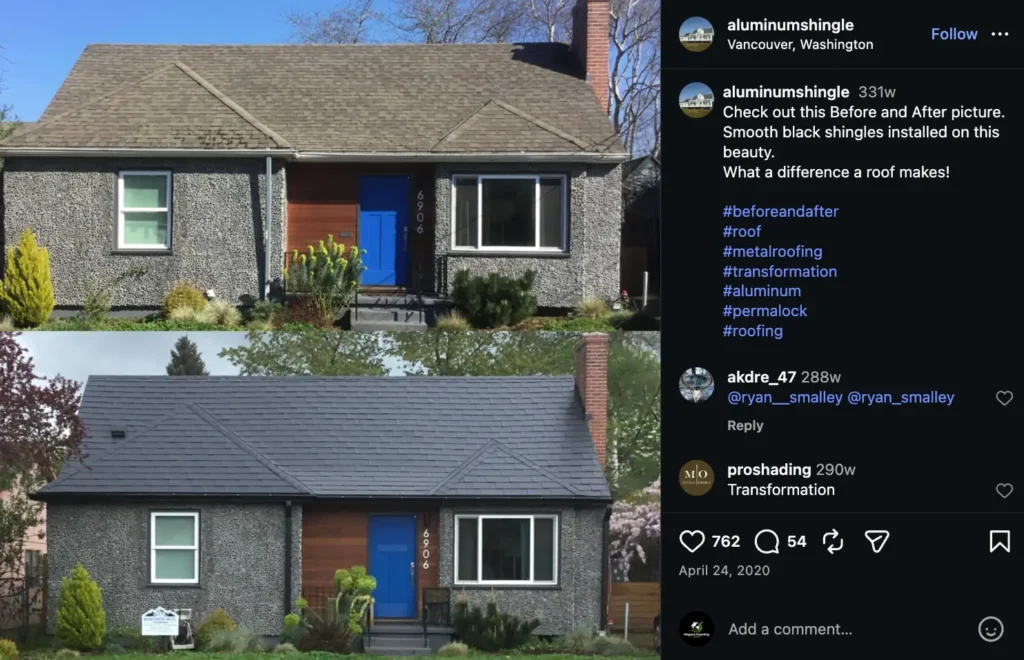
Before-and-afters are one of the best. Take photos and videos before you begin a job and record the finished projected. It helps leads imagine what result they could get plus see the quality of your work.
Look at this example of a roofing project before completion and afterwards.
Behind-the-scenes content also does great. Take pictures and videos of projects as you and your team work on them.
They don’t have to be perfect before-and-afters. Rather, showing what the daily life looks like and explaining how and why certain things are done.
You have a beautiful website. We understand. Maybe you even paid a marketing agency top dollar to develop it. However, one of the biggest lead gen mistakes you can make as a contractor is sending traffic to the home page.
Instead, you need to send users to a landing page. A dedicated page that explains your services and matches the traffic source, like keywords as we spoke about it earlier.
Good landing/service pages should be optimized for search engines, include social proof (think testimonials), a strong call to action, and clearly explain how you’ll benefit the customer.
You can have landing pages set up for each of your main services.
For example, with a bathroom remodelling client we worked with, Mastro Digital made dedicated pages for shower install, full remodels, vanity install, and walk-in tubs.
We then had dedicated paid ads and organic content that would send traffic to those pages for the best performance.
Here’s an example of a home services landing page for inspiration.
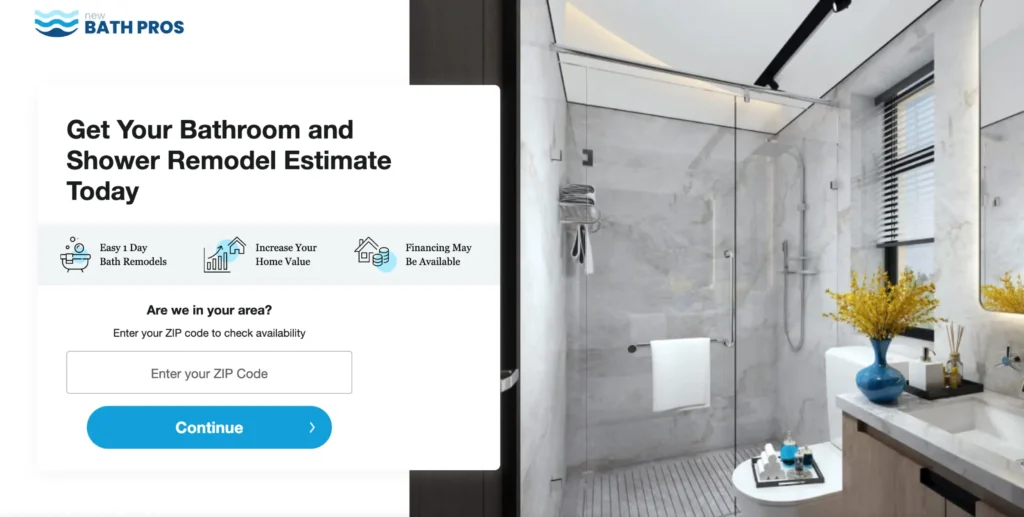
This is what we call the hero section. It’s the first main part above the fold that the customer sees.
It includes a call to action get a bathroom remodel quote, a field to enter your zipcode, and some benefits like a one-day install and increasing your home’s value.
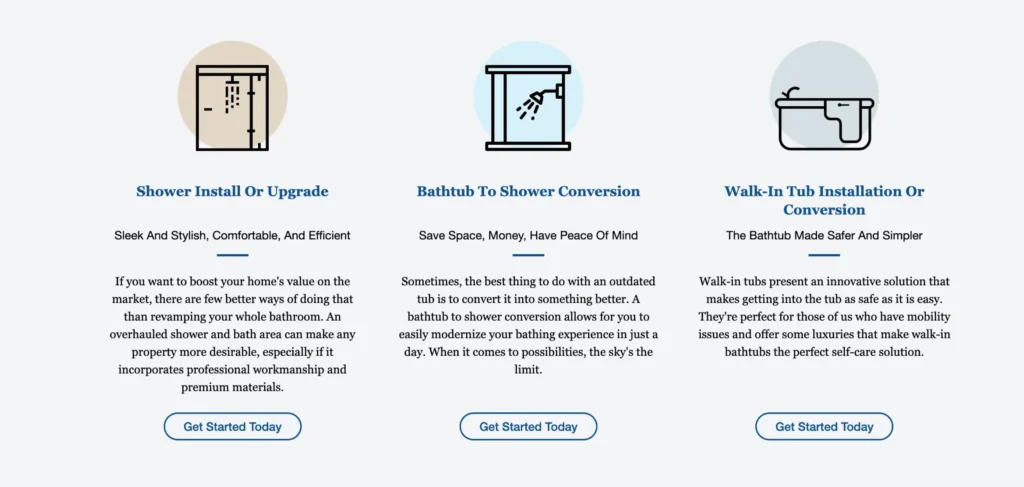
Next we can see the feature section of the landing page. Here they break down some of the core services they offer. Shower install, bathtub to shower conversion, walk-in tubs, etc.
Keep in mind they explain the benefits of the services. This includes increasing home value, safety, and saving money.
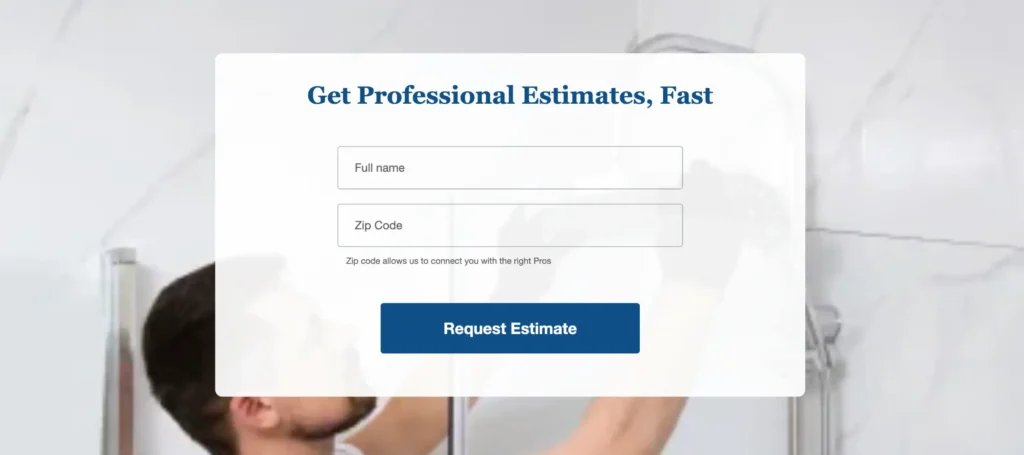
Lastly, we have the call to action. You want to have one main call to action on your landing page that appears multiple times depending on its length.
In most cases as a contractor or home service business, it will be to get a free estimate.
This pushes users on your website to fill out a form, make a phone call, or email you.
Your Google Business Profile isn’t just an online business card. For many contractors, it is one of their most valuable lead sources.
In fact, a whopping 97% of consumers use local searches when looking for a business. If you’re Google Business Profile isn’t optimized, you could be missing out on leads. Big time.
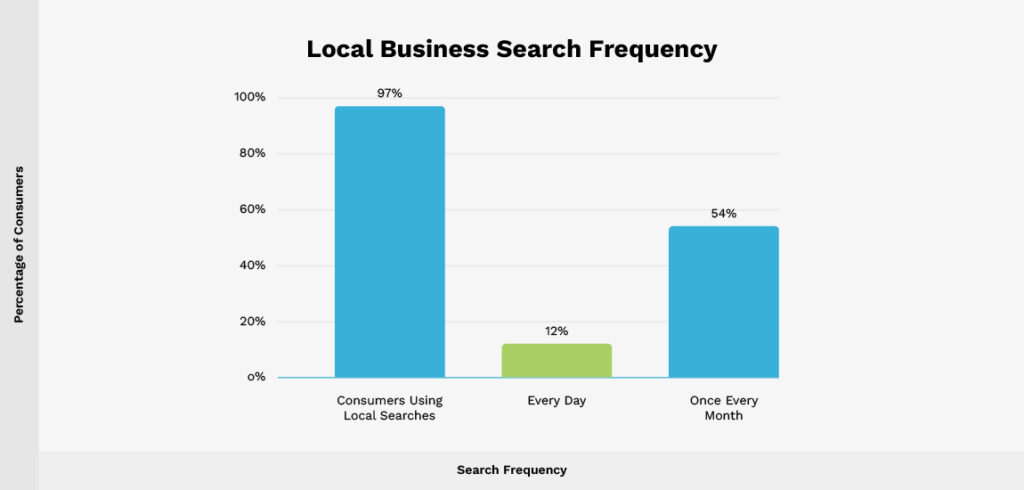
Google explains that local rankings are primarily influenced by relevance, distance, and prominence. Complete business information helps Google understand when your company is relevant, while reviews and links can contribute to prominence.
Start with the basics:
Do not try to game the system by stuffing keywords into your business name if those words aren’t actually part of your business name.
Build a legitimate profile that gives homeowners the information they need to choose you.
Then connect it with the rest of your local presence.
If your Google profile says one thing, your website says another, and an old directory has a phone number from five years ago, clean it up.
Make it easy for both Google and customers to understand exactly who you are and what you do.
Before someone gives you thousands—or tens of thousands—of dollars to work on their house, they’re probably going to check your reputation.
Reviews are especially important for contractors because the customer isn’t simply buying a product.
They’re inviting someone onto their property and trusting that company to show up, do a good job, and respect their home.
Heck, think about any time you’ve purchased a product or service. You probably checked our their Google profile, website, or social media for reviews.
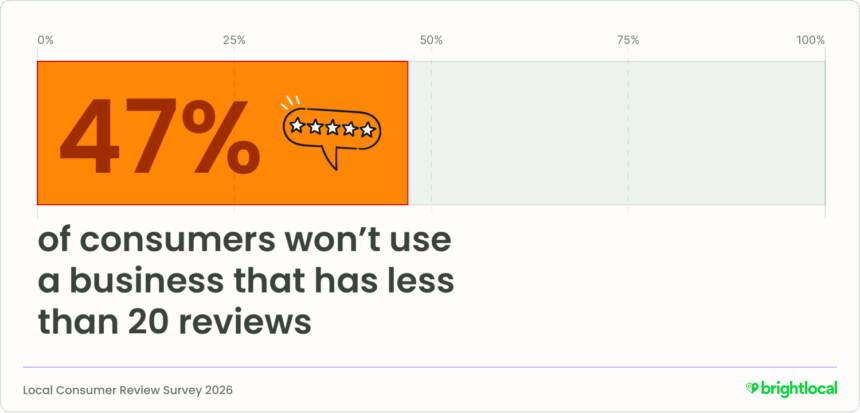
BrightLocal’s 2026 Local Consumer Review Survey found that 47% of people won’t work with a business that has less than 20 reviews.
It’s that important.
So make asking for reviews part of your process. A system might look like this:
Job completed → customer confirms they’re happy → text/email review request → reminder if necessary.
Your request doesn’t need to be fancy:
Thanks again for choosing us. If you’re happy with the work, would you mind leaving us a quick Google review? It really helps other homeowners feel comfortable choosing us.
Then send the direct review link.
Also make sure to respond to reviews.
Google itself says more reviews and positive ratings can help local ranking, while responses show customers that you value their feedback.
Most homeowners aren’t going to hire a contractor the first time they see your business. That’s especially true for higher-ticket projects.
Someone considering a $15,000 bathroom or $10,000 roof is going to do a lot of research and consideration.
Odds are they aren’t going to click one ad or post and convert.
Remarketing allows you to continue advertising to people who have already interacted with your business.
For example:
A few days after that, they see:
“Still thinking about your bathroom project? Request your free estimate.”
Now your company isn’t a random name they saw once.
You’re familiar.
Good remarketing content includes testimonials, before-and-afters, and guarantees.
You’re helping an interested homeowner become comfortable enough to take the next step.
You could have the best advertising campaign in your city and still lose money because nobody answers the phone.
This happens constantly.
The crew is busy.
The owner is driving.
Someone fills out a form at 7:30 p.m.
Nobody calls until tomorrow afternoon.
By then, the homeowner has spoken with three competitors.
An often-cited Harvard Business Review study analyzed 1.25 million sales leads across 42 companies and found businesses that attempted contact within an hour were nearly seven times as likely to qualify the lead as those that waited just an hour longer.
The study is older (it was published in 2011) but the lesson remains simple: inbound interest cools quickly.
What does that mean? You need a follow-up process.
At minimum:
New web lead → immediate automated confirmation → call as quickly as possible → text if no answer → follow-up call → additional follow-up over the next several days.
If someone calls and nobody answers:
Don’t spend $150 generating a contracting lead and then treat the incoming phone call like an inconvenience.
Let’s imagine a scenario.
Campaign A
Campaign B
Which one is better? Most marketing reports would say Campaign A.
But let’s keep going.
Campaign A:
100 leads → 20 appointments → 4 jobs
Campaign B:
100 leads → 50 appointments → 15 jobs
Now which campaign would you rather have? This is why cost per lead shouldn’t be your final metric.
You want to know:
Spend → leads → qualified leads → appointments → estimates → jobs → revenue
Install proper tracking for:
Then use a CRM or at least a consistent lead-management system to record what happened. HubSpot offers a free CRM you can use if you don’t have one.
It lets you track and understand:
If Google Ads generated 50 leads but Meta generated fewer leads that closed at twice the rate, you need to know that. Otherwise you’re optimizing blind.
Not every lead is ready today. And not every past customer is finished buying forever. That means your database has value.
For instance, a roofer could contact previous customers about inspections after major storms.
An HVAC company could send seasonal maintenance reminders.
A pest control company could promote recurring treatments.
You already spent money acquiring these people. Don’t automatically pay to acquire them again. Build simple groups in your CRM:
Then communicate when you have something relevant to say. It can be useful reminders, seasonal advice, maintenance info, or relevant promotions.
The goal is to stay familiar without becoming annoying.
Generating enough leads as a contractor is half the battle. Too many home service businesses rely on word of mouth and referrals.
Don’t get us wrong. Those are great. However, you need a predictable and scaleable system if you want to grow over the long term.
The main point is to get the fundamentals right.
Show up where customers are looking, give them a reason to contact you, make the experience easy, respond fast, and track what turns into business.
The contractors who get the best results from marketing aren’t always generating the cheapest leads. They’re generating the right leads.
That’s how contractor lead generation becomes a predictable growth system instead of another monthly expense you’re hoping works.
Contact the Mastro Digital team to learn more about our lead generation services where we take care of everything A-Z.
Mastro Digital is a home services marketing and lead generation agency headquartered out of Niagara Falls, Ontario and serving clients across North America.
Copyright © 2026 All Right Reserved Mastro Digital